

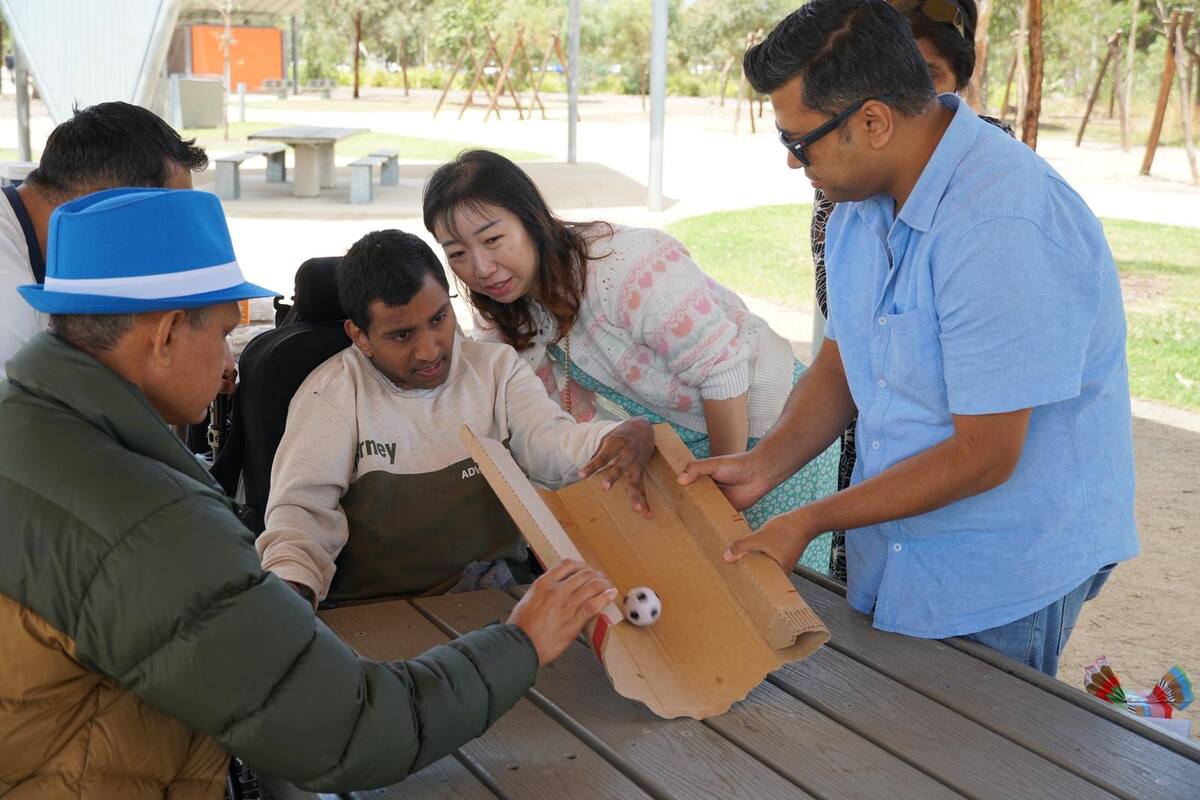
Therapeutic support is the practice that happens between therapy appointments. At Enable Hub, that practice happens with one of our support workers, in the places your week actually happens: your own kitchen, the shops around Windsor and Richmond, the library, or out with our Sunday group.
“A therapist might see someone for an hour every couple of weeks. Our team is there for the days in between, and that’s where a new skill sticks with practice and support.”
Anil, Director, Enable Hub
Therapy and therapeutic support are different jobs
Therapy itself comes from allied health professionals, such as occupational therapists and speech pathologists. The NDIS says only qualified and registered allied health professionals can deliver therapy supports. We don’t try to be your therapist. We’re the team that makes your therapist’s plan happen on an ordinary Wednesday afternoon in the Hawkesbury.
How we start
We start with a meet and greet, at our office in the Riverview Shopping Centre in Windsor, in your home or over the phone. We read your NDIS plan together, look at your therapist’s recommendations if you have them and ask what’s hardest for you right now. Then we agree on one goal in your own words.
Before the first session, we introduce you to your support worker. We match people on personality and interests as well as availability. Language matters too: our team speaks Nepali, Hindi, Cantonese and Japanese as well as English, and practising a communication goal is easier in the language you think in.
What it looks like with our team
For example, picture someone whose OT has broken up the tasks involved in making lunch into small steps. Your Enable Hub support worker would work through the steps with that person in their own kitchen each week. The prompts get fewer as our participant gains confidence, so that eventually they’re preparing their own lunch with as much independence as possible.
How we keep you and your family in the picture
Every support is recorded, so you and your family can see what was done each session. Two weeks after your support starts, we call to check how it’s going. If something isn’t working, we try a different way instead of doing more of the same.
When your therapist updates their recommendations, we’ll build them into our support sessions with you. And if something outside the NDIS is getting in the way, such as housing or Centrelink, our social worker can help with putting you in touch with the right resources as well.
How it’s funded, in one paragraph
Bring your plan to our initial meet and greet and we’ll go through it with you. In short, therapy from an allied health professional is usually funded under Improved Daily Living, in the capacity building part of your plan. Practice with one of our support workers is charged at support worker rates, for example for skill development and training, and which budget pays for it depends on how your plan is written. You don’t need to bring a particular diagnosis.
What families ask us first
Will it be the same support worker each time?
We aim for a small, consistent team, and you meet your worker before they start, matched on personality, interests and language. If the match isn’t right, you can ask for a change at any time.
Do we need a therapist before we start?
It works best when you have one. If you don’t yet, we can start on the everyday goals in your plan, and our social worker can help you find a therapist who suits.
Talk to Enable Hub about therapeutic support
Enable Hub is a registered NDIS provider based in Windsor, supporting people living with disability across the Hawkesbury, the Hills District and Western Sydney. You can read more about our therapeutic support services, or call us about the goals in your plan. We’ll get back to you within one business day, and a family member is welcome to make that first call for you.
Request a callback from Enable Hub or call us on 02 9037 3716.
Related Articles

OCT
Can NDIS Funding Cover Transport? Getting to Appointments, Work and Community Activities
How NDIS funding helps with transport, and how Enable Hub gets people around Windsor and the Hawkesbury to the shops, appointments, classes and outings.
Read More
SEPT
Switching NDIS Providers: What Actually Changes and How to Do It Smoothly
Thinking about switching NDIS providers? A friendly guide to what changes and how to move without a gap in support, for people in Western Sydney.
Read More
AUG
How to Find the Right Disability Support Worker in Western Sydney
How to find and choose the right disability support worker in Western Sydney and the Hawkesbury, from checking screening to planning a first meeting.
Read More